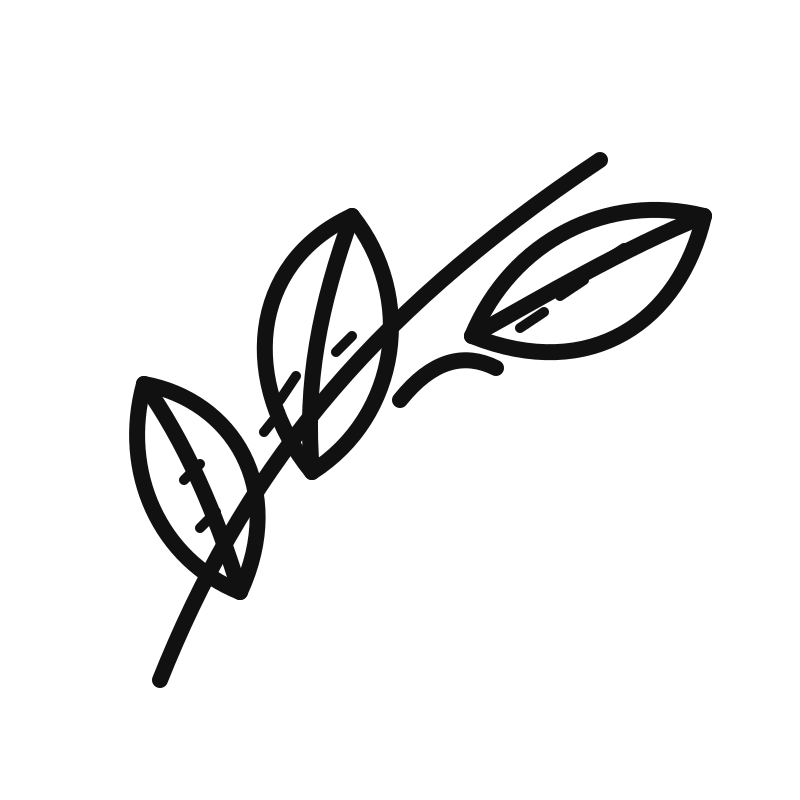
 Line drawing
 Clipart
Auto-detected settings
The image is analysed the moment it loads: colour or black-and-white, how many colours it really has, where the brightness threshold sits. You can always override.
Drop a PNG or JPG and get a scalable vector in about a second. Pick colour or black-and-white, nudge two sliders, download. Your image never leaves your computer.
Drop your image here
PNG · JPG · GIF · WebP · BMP · SVG — up to 20 MB
Choose imageor paste with Ctrl+V
Why vectorize
A bitmap is a fixed grid of pixels: scale it up and every edge turns to mush. An SVG describes the shapes themselves — curves, corners, fills — so it renders razor-sharp at any size, from a favicon to a billboard, and usually in a fraction of the file size.


What you get
Most online vectorizers walk you through four steps, a palette picker and a credit meter before they let you download. AnyToSVG looks at your image, picks sensible settings, and shows you the result before you have touched anything.
The image is analysed the moment it loads: colour or black-and-white, how many colours it really has, where the brightness threshold sits. You can always override.
Colour mode traces one layer per colour with no hairline gaps, and smoothly shaded areas become real SVG gradients instead of stepped bands. Black-and-white mode turns sketches, scans and signatures into a single crisp path.
Tick a box and the colour surrounding your artwork is dropped — while enclosed areas of the same colour stay put. Or hide any colour by clicking its swatch.
Drag the divider across the image, zoom to 4000 %, flip the background between checkerboard, white and dark. Every slider re-traces instantly.
One <path> per colour in the original pixel coordinates, nothing else. Opens as expected in Illustrator, Inkscape, Figma, Cricut Design Space and browsers.
Download the SVG, copy the code straight into your HTML, or render a PNG at 1×, 2× or 4× from the vector. Paste images with Ctrl+V.
How it works
Three steps, and the second one is optional. There is no palette wizard, no model selection and no credit counter — just an image and a result.
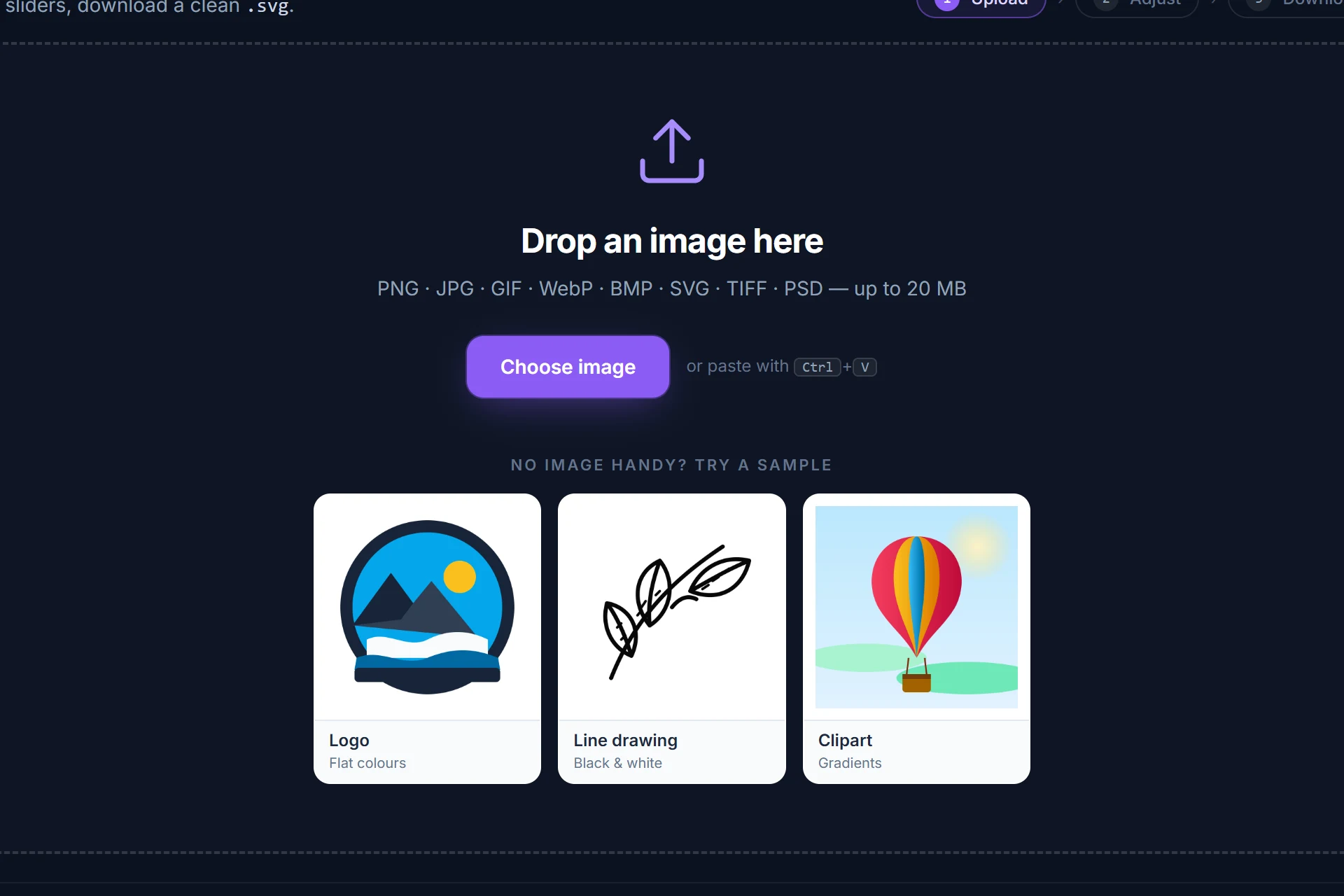
Drag a PNG, JPG, GIF, WebP or BMP onto the page, choose it from disk, or paste it from the clipboard. It is analysed and traced immediately.
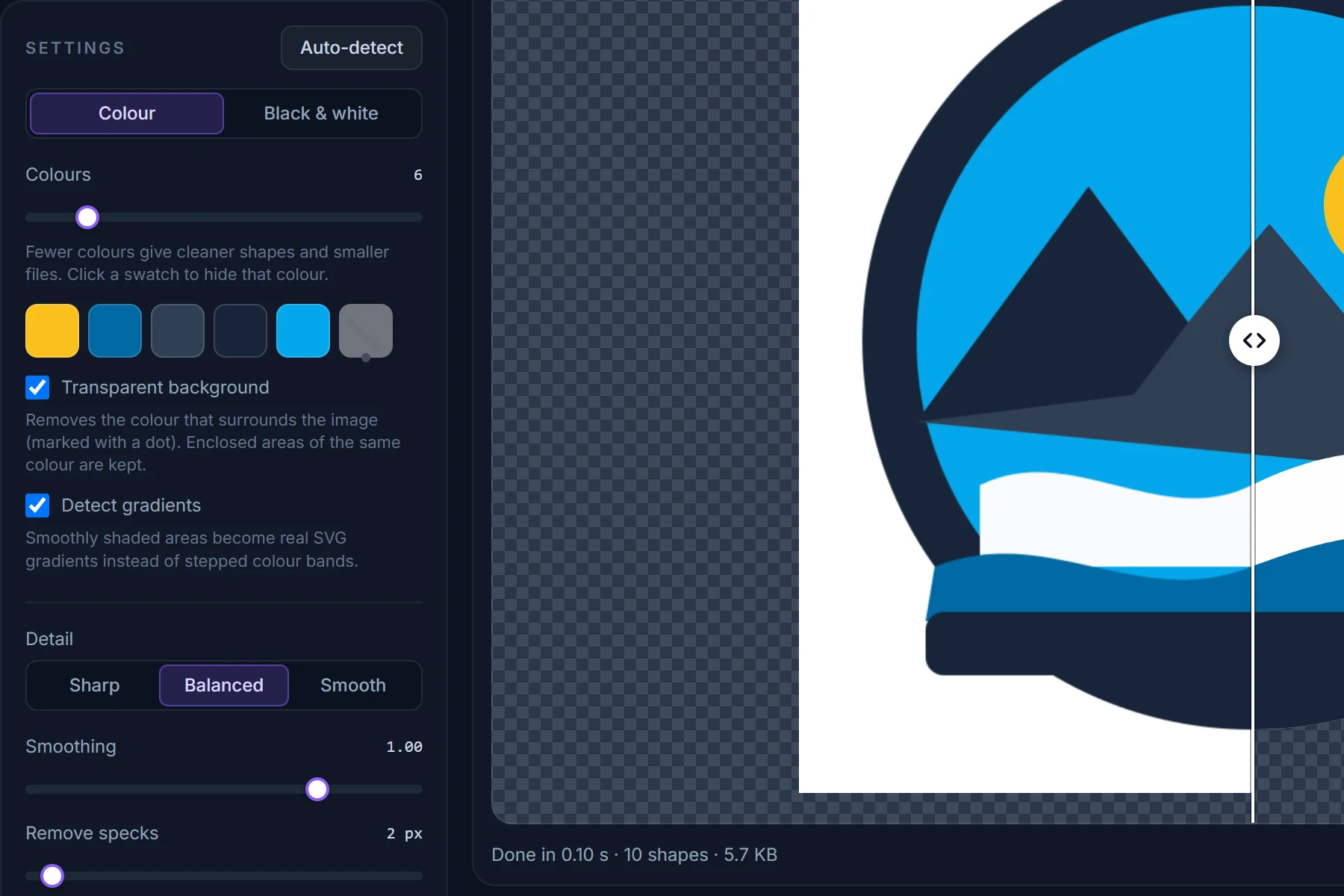
Switch between colour and black-and-white, change the number of colours, hide a colour or make the background transparent. The preview re-traces as you move the sliders.
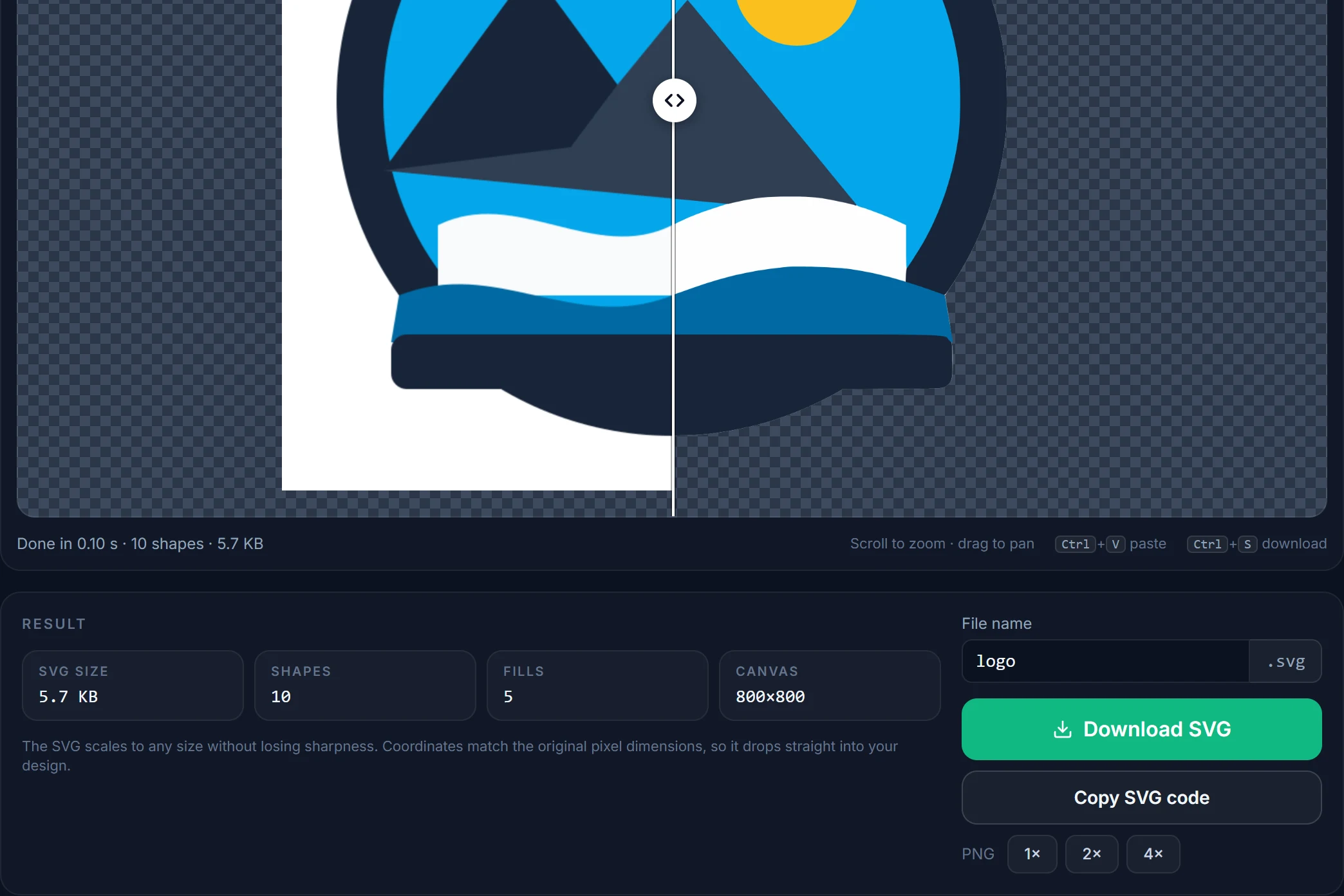
Grab the SVG, copy its code, or render a PNG at 2× or 4×. The file is named after your image and its coordinates match the original pixels.
Transition colours
Every other tracer reduces an image to flat colours first, so a sky, a highlight or a shaded stripe turns into stepped bands with hard edges. AnyToSVG looks for smoothly shaded areas before it quantises, fits each one with a colour model, and writes it as a real SVG gradient — one shape, no bands, a fraction of the file size.
Pixels that differ only slightly from all four neighbours are flood-filled into regions; anti-aliased edges act as walls, so regions never leak into each other.
Linear (a direction of change and colour stops along it) or radial (a centre and stops by distance) — whichever explains the pixels with the smaller residual.
Shading that bends around a shape is cut into a few pieces, each with its own gradient. The models agree along the seams, so the split is invisible.
A <linearGradient> or <radialGradient> in the original pixel coordinates, plus one path. Illustrator, Inkscape and Figma edit it like any other gradient.
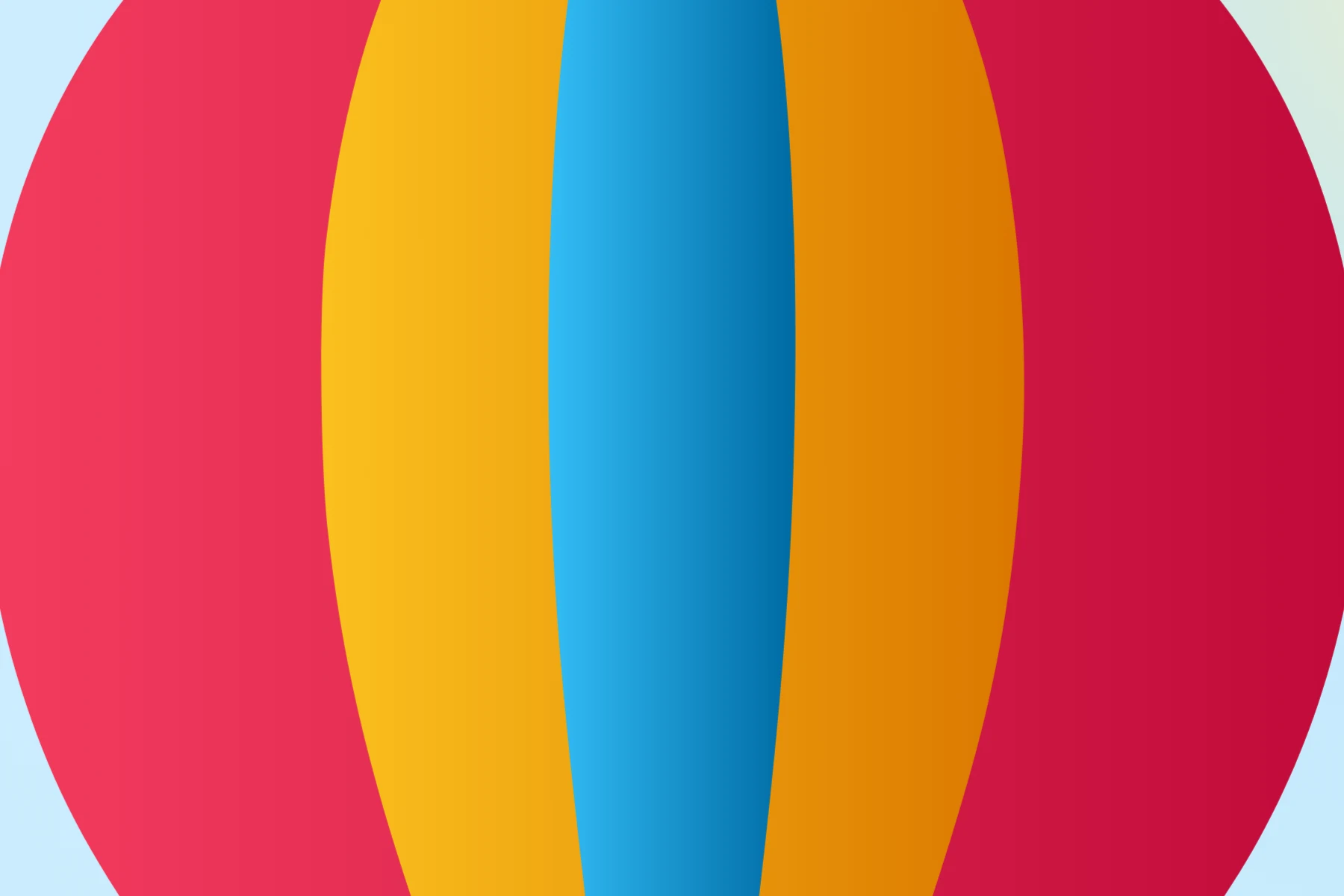
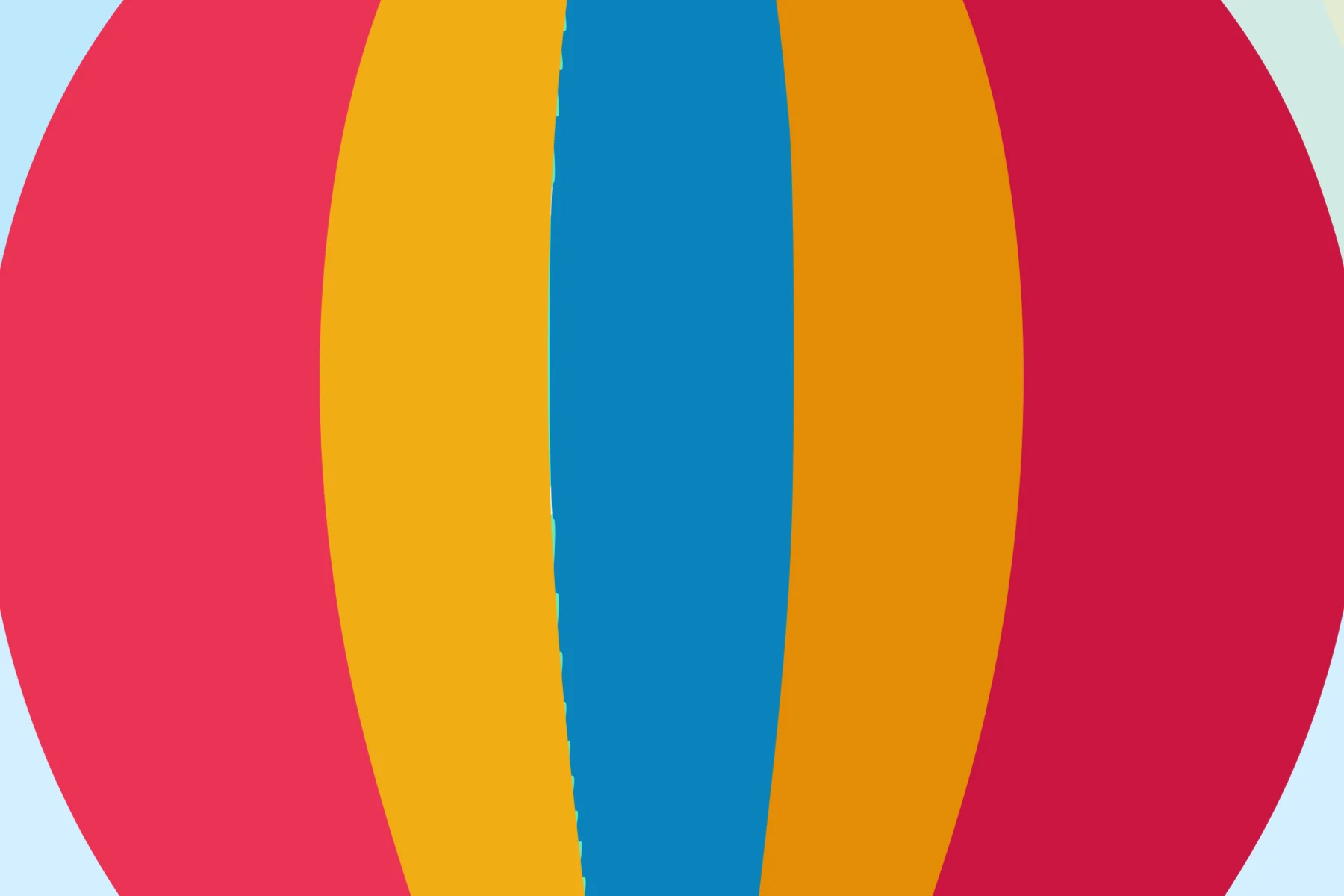
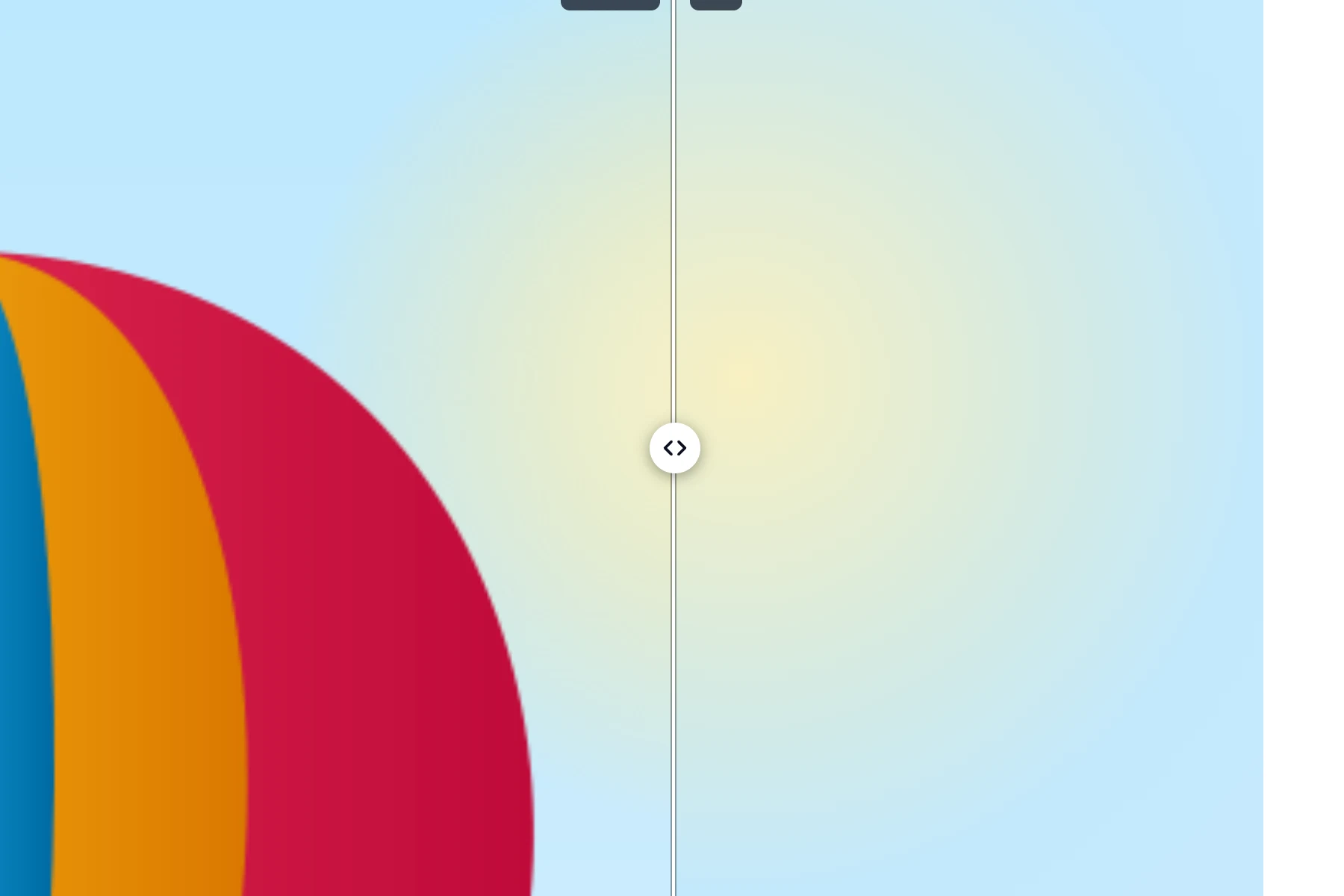
<radialGradient> — original on the left of the divider, SVG on the right.<defs>
<radialGradient id="g1" gradientUnits="userSpaceOnUse"
cx="641" cy="158" r="752">
<stop offset="0" stop-color="#f8f0c1"/>
<stop offset="0.21" stop-color="#c3e9fc"/>
<stop offset="1" stop-color="#d7f0fe"/>
</radialGradient>
<linearGradient id="g4" gradientUnits="userSpaceOnUse"
x1="369" y1="311" x2="430" y2="311">
<stop offset="0" stop-color="#33bcf5"/>
<stop offset="1" stop-color="#006ca5"/>
</linearGradient>
</defs>
<path fill="url(#g1)" d="M0 400l0 400 400 0…"/>
<path fill="url(#g4)" d="M400 150c-14 7…"/>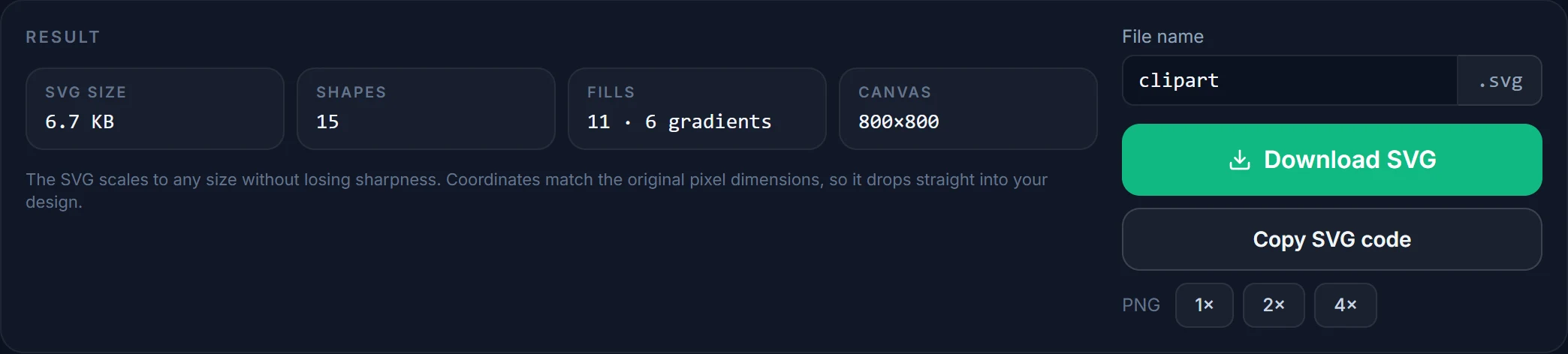
See it before you save it
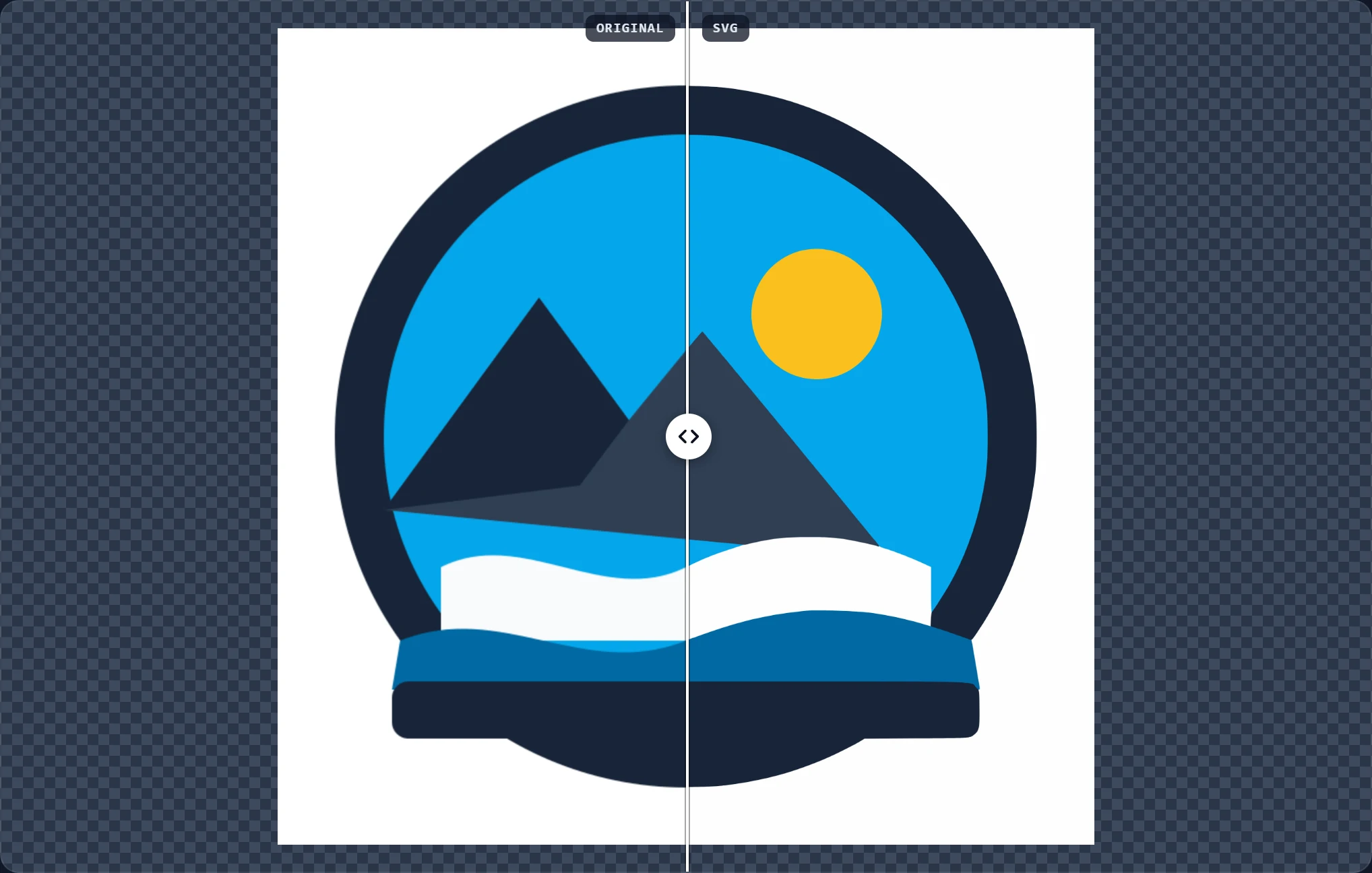
The preview overlays the SVG on your bitmap. Drag the divider, scroll to zoom in on an edge, and you will know exactly what you are downloading — no surprises after the fact.
Compared with the usual suspects
The well-known online vectorizers produce good paths — and wrap them in accounts, credits, upload queues and a four-step wizard. AnyToSVG keeps the good part.
| AnyToSVG.com | Typical online vectorizer | |
|---|---|---|
| Where the work happens | Your browser (WebAssembly) | Their servers |
| Your image | Never uploaded | Uploaded and kept for a while |
| Account / credits | None | Sign-in, free quota, then paid |
| Shading and gradients | Real SVG gradients | Flat colour bands |
| Steps before a download | 1 — drop the image | 4 — model, palette, quality, colours |
| Time to first result | Under a second | Upload + queue + render |
| Price | Free | Subscription for full-size output |
By format
Same engine for every input; each page explains what is particular about its format — transparency, compression noise, dithering — and the settings that matter for it.
From the maker
Every time I needed a logo as SVG I ended up on the same site: upload, wait, pick a model, pick a palette, sign in, run out of credits. The algorithm underneath is thirty years old and runs in milliseconds. I wanted the algorithm without the wizard — so I put it in the browser.

Questions
Short answers here; the full FAQ covers formats, quality settings, photos and privacy.
Yes — free for personal and commercial use, with no account, credits, watermark or download limit.
No. Tracing runs in your browser with WebAssembly; PNG, JPG, GIF, WebP, BMP and SVG files never leave your computer. Only formats browsers cannot open (TIFF, PSD, HEIC, PDF) are converted to PNG on our server, in memory, and discarded at once.
Logos, icons, clipart, line drawings, signatures and anything with flat colours convert almost perfectly. Photos are posterised into a handful of colours — a stylised look, not a photo-realistic one.
Yes. Tick Transparent background and the colour surrounding the artwork is dropped while enclosed areas of the same colour are kept. Any other colour can be hidden by clicking its swatch.
Drop it in, check the preview, download the SVG. Free, in your browser, nothing to install and nothing uploaded.